HIGHLIGHTS
- Energy-policy outreach: On 16 September 2025, SDU’s Human Capital Development Centre co-organised an ESCO Model seminar with the Energy Committee, bringing together a Member of Parliament, energy officials and sector specialists to discuss energy efficiency in public and private sectors.
- Legal education for public-agency administrators: On 12 January 2025, SDU’s School of Law and Politics delivered its third cohort of the Laws and Justice Process programme for administrators of public and private agencies.
- Statutory mediation upskilling: On 19–20 July 2025, SDU delivered two cohorts, 26 and 27, of training on the Dispute Mediation Act B.E. 2562 (2019), with a course recognised by กพยช.
- Public evidence: The three activities are documented through publicly accessible SDU news reports, providing evidence of outreach, general education, upskilling and capacity-building during 2025.
Suan Dusit University (SDU) supports the development of informed public decision-making by sharing academic and professional knowledge with public-sector administrators, legislators, technical agencies and other policy-relevant stakeholders. In 2025, the University’s Human Capital Development Centre and School of Law and Politics delivered activities addressing energy efficiency, legal principles, justice processes and dispute mediation. These activities respond to the intent of SDG 16.3.2: to provide outreach, general education, upskilling and capacity-building to policy- and lawmakers on relevant subjects, including technology, climate-related challenges and law.
The evidence shows three complementary modes of engagement. First, SDU convened a policy-relevant energy-efficiency discussion with the parliamentary Energy Committee and technical agencies. Second, its School of Law and Politics operated a legal and justice-process programme explicitly designed for administrators of public and private agencies. Third, the School delivered recognised training on statutory dispute mediation, combining legal content with practical skills and professional ethics.
Connecting Energy Technology with Public Policy
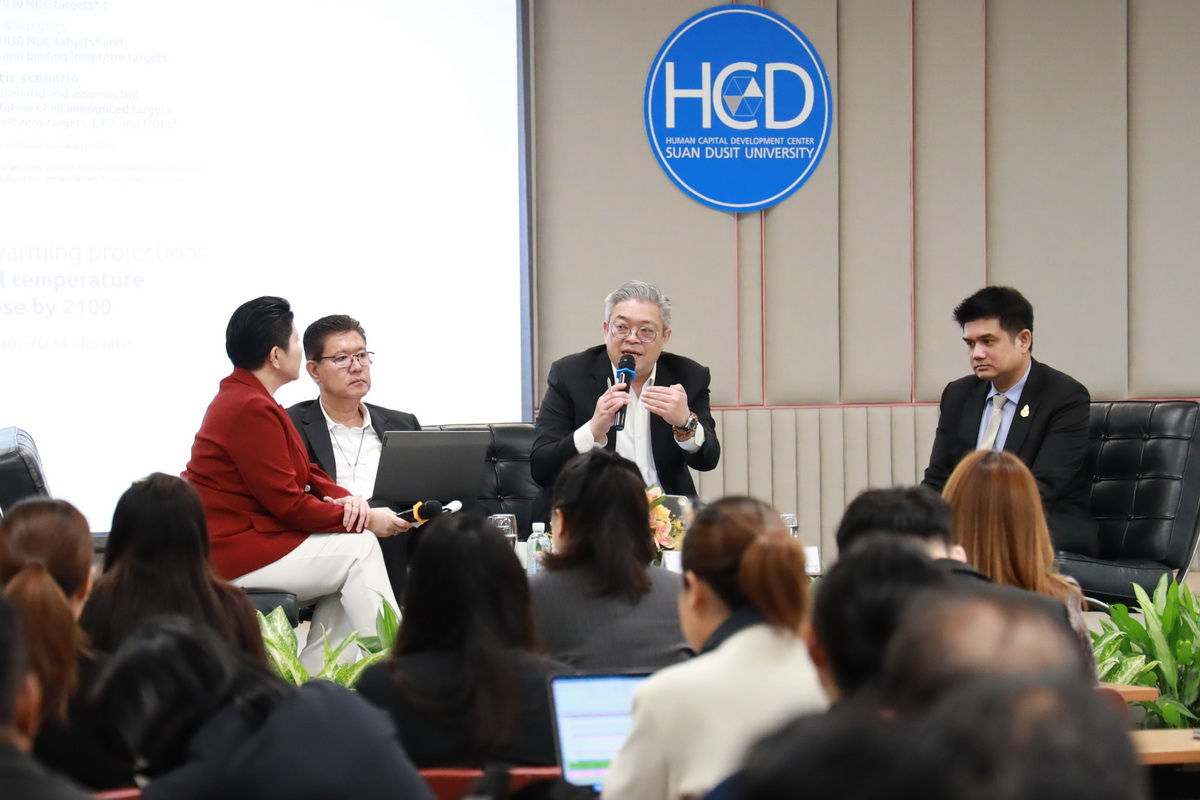
On 16 September 2025, SDU’s Human Capital Development Centre co-organised a seminar entitled “Promoting the ESCO Model for Energy Saving in the Public and Private Sectors” with the Energy Committee. Dr. Waranee Wessunthep, Vice President for Suphan Buri Campus, welcomed participants, while Mr. Parames Witthayarak, Third Vice-Chair of the Energy Committee and Member of Parliament for Bangkok Constituency 1, opened the seminar.
The programme created a structured forum in which parliamentary, government, university and energy-management perspectives could be considered together. Speakers included Mr. Nattapol Runpraseng, Head of the New Building Standards Setting and Control Group in the Energy Regulation and Conservation Division of the Department of Alternative Energy Development and Efficiency; Mr. Athit Wetchakit, a subcommittee member studying modern technologies for efficient energy use; Mr. Peerasut Theerakomen of the Thai Energy Service Company Association; and Dr. Nattanit Sirisajjanurak, Deputy Director of SDU’s Human Capital Development Centre.
This activity demonstrates a direct, documented connection between SDU’s capacity-building role and a policy-relevant technology issue: the Energy Service Company (ESCO) Model for energy saving. On one day—16 September 2025—SDU and the Energy Committee enabled discussion across public and private sectors, with the agenda focused on practical approaches to energy efficiency. The public event report confirms the date, host institutions, speakers and subject matter; however, the number and occupational roles of attendees were not reported. [
Legal Knowledge for Public-Agency Administration
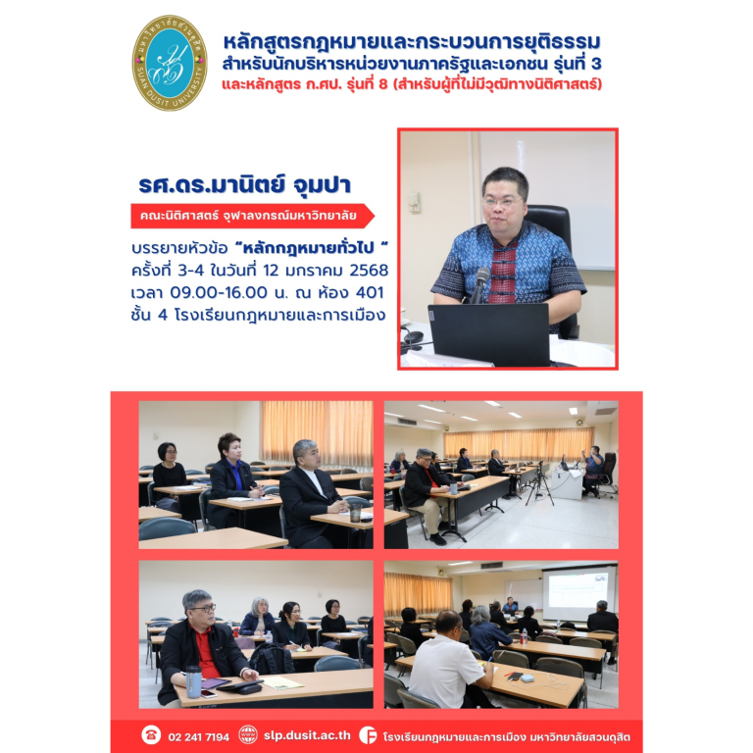
SDU’s School of Law and Politics provided a further channel for capacity-building through its “Laws and Justice Process for Administrators in Public and Private Agencies” programme, Cohort 3. On 12 January 2025, Associate Professor Dr. Manith Chumpha of the Faculty of Law, Chulalongkorn University, delivered sessions three and four on General Principles of Law. The activity ran from 09.00 to 16.00 at Room 401, fourth floor, School of Law and Politics, SDU.
The programme’s stated audience—administrators in public and private agencies—makes this SDU activity particularly relevant to SDG 16.3.2. General principles of law and the justice process are foundational knowledge for administrators whose responsibilities may involve implementing regulations, making procedurally sound decisions, or engaging with legal and justice institutions. The same event also included Cohort 8 of the ก.ศป. programme for participants without a law degree, expanding access to structured legal education beyond formally trained lawyers.
The January 2025 delivery therefore provides evidence that SDU makes legal learning available in a programme designed for public-agency administration, rather than limiting such knowledge to degree students. The public report confirms the programme title, cohort, date, lecturer, topic, time and venue.
Strengthening Dispute-Mediation Competence under Thai Law
On 19–20 July 2025, the School of Law and Politics delivered Cohorts 26 and 27 of its training programme on the Dispute Mediation Act B.E. 2562 (2019). Associate Professor Dr. Thanaphat Patchim, Dean of the School, opened the sessions. The programme was recognised by กพยช. and was delivered online via Zoom, enabling participation beyond the University’s physical campus.
The training linked statutory knowledge to skills required for practical dispute resolution. Dr. Thapaphak Buranasing, Director of the Dispute Resolution Promotion Division, addressed the key provisions of the Act and related mediation law. Associate Professor Dr. Med. Banphot Tonteerawong discussed relationship-building, body language and constructive conditions for peaceful mediation, while Senior Civil Court Judge Pratchaya Yuprasert addressed negotiation techniques, difficult participants, emotional self-management, mediator qualifications and ethics.
These two 2025 cohorts demonstrate SDU’s continuing capacity to provide law-related upskilling that combines legislation, practice and ethics. As the public report does not identify the employment roles of learners, this activity should be presented as supplementary evidence of legal capacity-building; it should not be used alone to claim training specifically delivered to policy- or lawmakers. [Information required: participant profiles and the number of policy-makers, lawmakers or public-sector officials enrolled in Cohorts 26–27.]
Continuing an Evidence-Based Outreach Approach
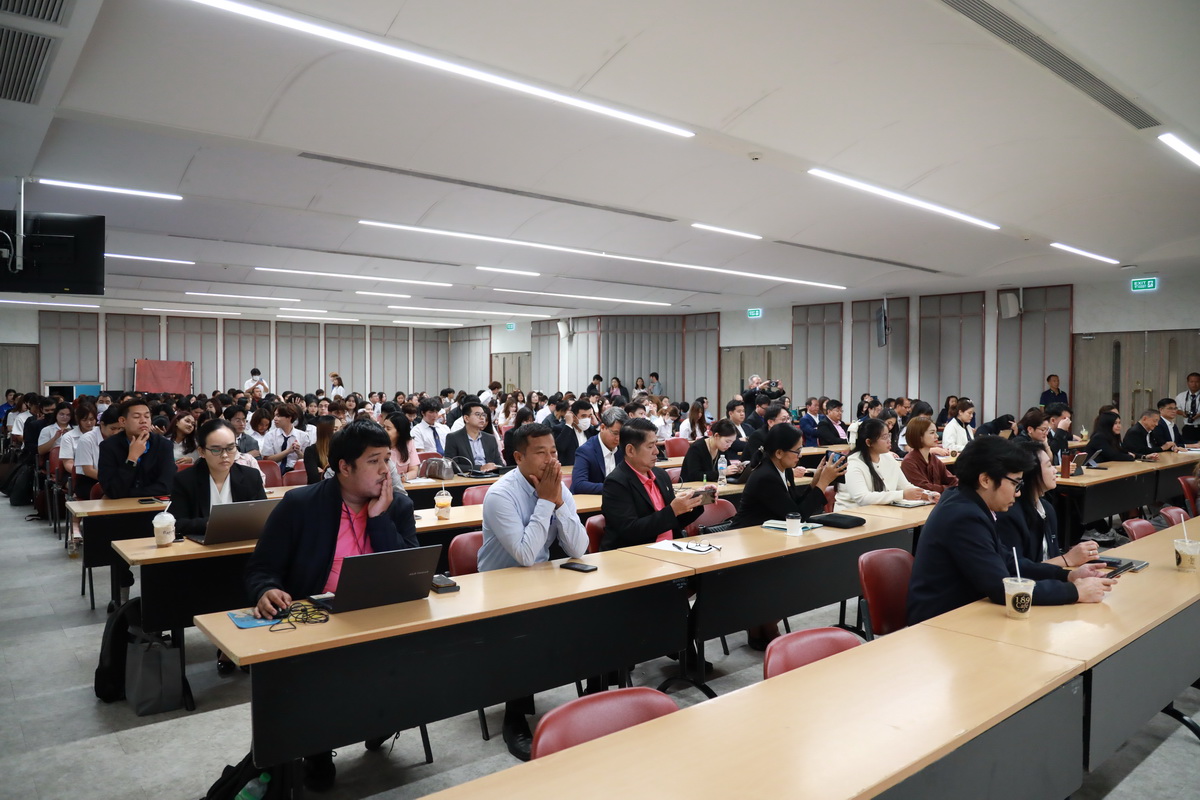
Together, the ESCO seminar, legal-and-justice programme and mediation training show that SDU provided multiple forms of outreach and capacity-building in 2025. The activities connected SDU expertise with a parliamentary committee, government technical personnel, public-agency administrators, legal specialists and dispute-resolution practitioners. They therefore offer substantive evidence for SDG 16.3.2, particularly through the ESCO seminar and the programme explicitly designed for public-agency administrators.
For future reporting, SDU should retain participant registers, agency affiliations, learning assessments, satisfaction results and evidence of how participants apply knowledge in policy, administrative or legislative work. [Information required: responsible unit, continuing budget and 2026 delivery plan.] These records would allow the University to demonstrate not only that programmes were delivered, but also their reach and measurable contribution to public decision-making capacity.
Public evidence links
ESCO Model seminar with the Energy Committee, 16 September 2025
Dispute Mediation Act training, Cohorts 26–27, 19–20 July 2025