
HIGHLIGHTS
- Government-commissioned research: In 2025, the Biodiversity-Based Economy Development Office (Public Organization) appointed SDU’s Environmental Center as consultant for research, data collection and analysis on biodiversity-based sustainable tourism indicators.
- Three policy-relevant study areas: The research covered Kui Buri National Park and surrounding areas, Khao Sam Roi Yot National Park and surrounding areas, and the Pak Nam Pran Buri area in Prachuap Khiri Khan Province.
- Evidence for national and provincial planning: SDU reported Knowledge, Attitude and Practice (KAP) findings and facilitated consultation on the Capacity Development Scorecard for integrating biodiversity into tourism at national and provincial levels.
- Research transferred for local-governance use: On 23 May 2025, SDU delivered research on participatory local-development planning and transparency to 13 organisations, including national government agencies and local government bodies.
Suan Dusit University (SDU) undertakes policy-focused research in collaboration with public-sector organisations to generate evidence for public decision-making, local development and sustainable resource management. In 2025, two documented initiatives demonstrated this role: research commissioned by the Biodiversity-Based Economy Development Office (Public Organization) on biodiversity-based tourism, and research on public participation in local-development planning for transparency in industrial and civil-works implementation.
These initiatives are relevant to SDG 16.3.3, which considers whether a university undertakes policy-focused research in collaboration with government departments. The strongest evidence is the 2025 appointment of SDU’s Environmental Center as a project consultant by a public organisation, with defined responsibilities for study design, opinion surveys, data collection and analysis, indicator development and the assessment of project progress and outcomes. The local-governance research further demonstrates the transfer of research findings to government agencies and local authorities for practical use.
Producing Evidence for Biodiversity-Based Tourism Policy
The Biodiversity-Based Economy Development Office (Public Organization) assigned SDU’s Environmental Center, Faculty of Science and Technology, to serve as consultant for the 2025 study, survey, collection and analysis of opinion data on sustainable tourism based on biodiversity. The assignment included developing data and indicators to assess progress and achievement under the MBT project framework. SDU’s research work covered three study areas in Prachuap Khiri Khan Province: Kui Buri National Park and its surrounding area, Khao Sam Roi Yot National Park and its surrounding area, and the Pak Nam Pran Buri area.
This is policy-focused research because it addresses the evidence needed to manage tourism while recognising biodiversity, local impacts and economic value. Dr. Pornthida Thepprasit, Director of SDU’s Environmental Center and project consultant, and Dr. Thongchai Thongma of Suan Sunandha Rajabhat University reported findings from the survey. The research examined public Knowledge, Attitude and Practice (KAP) regarding biodiversity-based tourism, threats to biodiversity and the economic value generated by biodiversity-based tourism in the MBT–GEF 7 project area in Prachuap Khiri Khan Province.
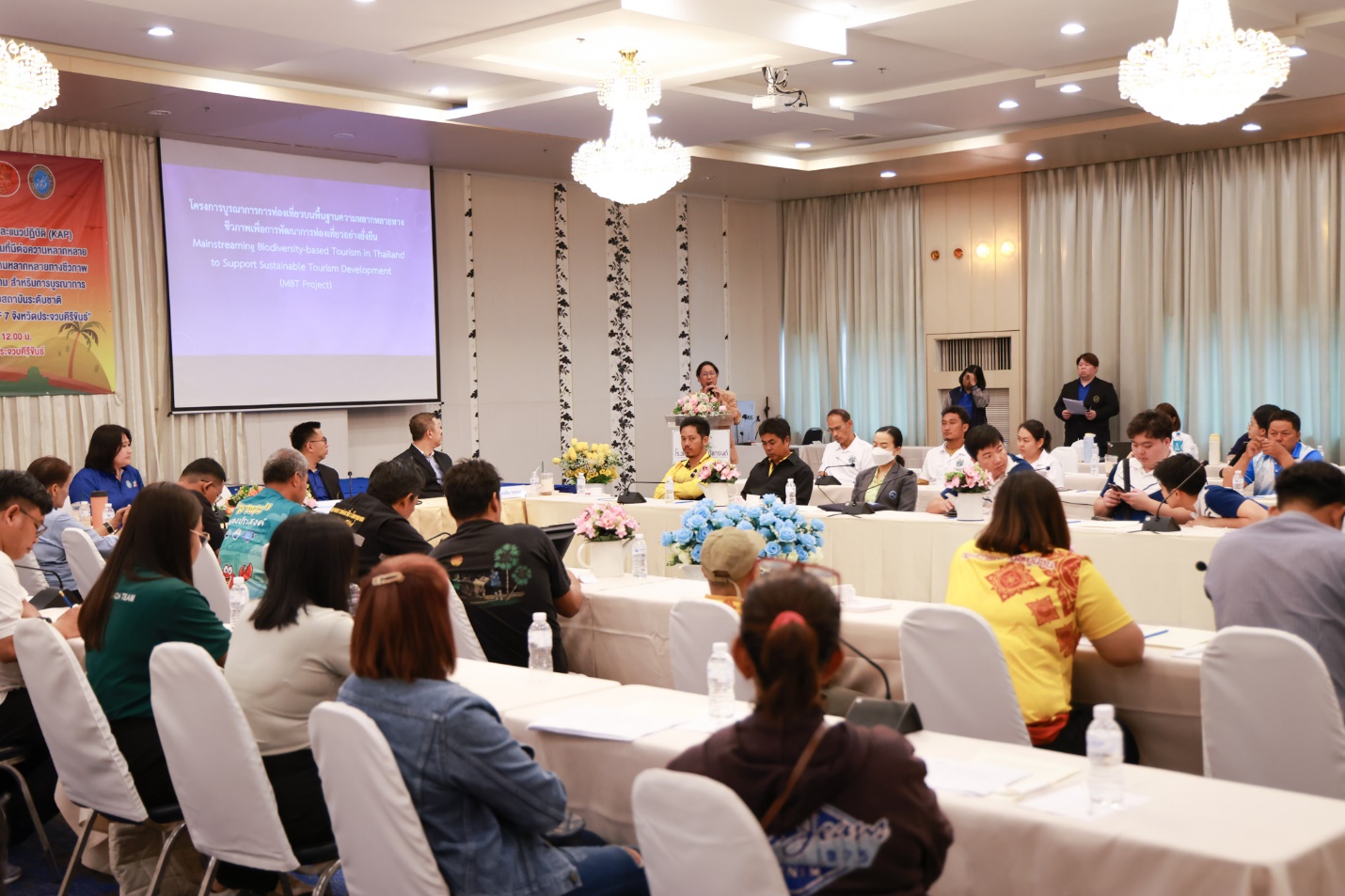
On 22 October 2025, SDU convened a workshop in Prachuap Khiri Khan Province to report findings and gather feedback from relevant stakeholders. The workshop considered the KAP findings and consultation on baseline capacity development for integrating biodiversity into tourism at both national and provincial institutional levels through a Capacity Development Scorecard (CD Scorecard). This process linked SDU’s data collection and analysis with a public organisation’s framework for assessing implementation progress and results.
Extending Research Findings to the National Level
SDU subsequently held a national online workshop on 14 November 2025 to communicate the same research programme’s findings and receive further input. The public report confirms that the Biodiversity-Based Economy Development Office (Public Organization) commissioned SDU as the project consultant and that the University presented findings on KAP, biodiversity threats and the economic value of biodiversity-based tourism.
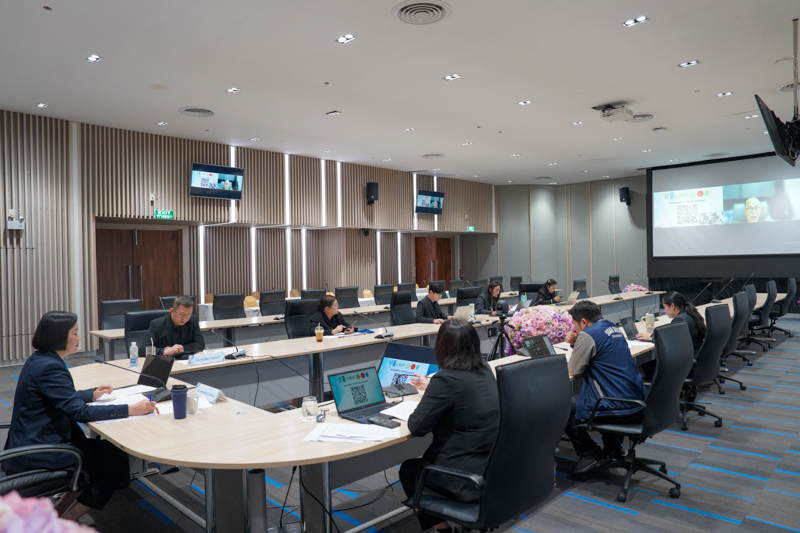
The national workshop also sought feedback on the CD Scorecard for integrating biodiversity into tourism in national institutions. Dr. Pornphan Buathong, President of Suan Dusit Poll, facilitated this consultation. By reporting evidence from the field research and opening it to national-level consultation, SDU connected locally collected data with discussions concerning institutional capacity and biodiversity integration in tourism planning.
Across the two workshops, SDU moved from field-level research in three specified areas to a national online consultation within 23 days, from 22 October to 14 November 2025. The evidence publicly identifies the commissioning public organisation, SDU’s consultancy role, the three study areas, the research topics and the use of results in a national-level consultation. [
Delivering Local-Governance Research for Practical Use
A second 2025 research activity addressed public participation and transparency in local development. Associate Professor Dr. Thanaphat Patchim and the research team disseminated findings from the research programme, “Public Participation with Government Agencies in Local Development Planning for Transparency: Implementation in Industry and Public Works.” The event was opened by Mr. Surapol Charoenphum, Deputy Director-General of the Department of Local Administration.
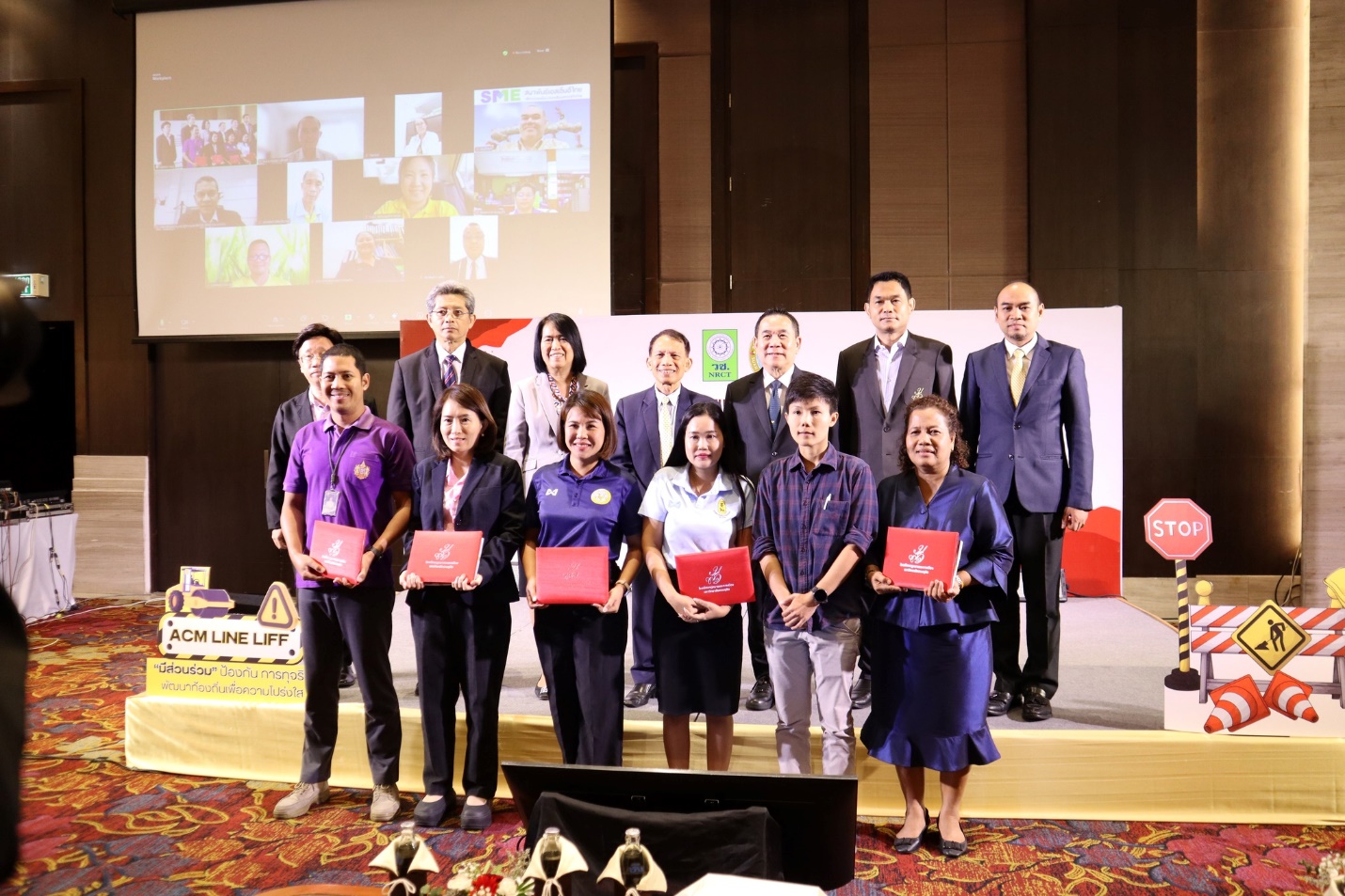
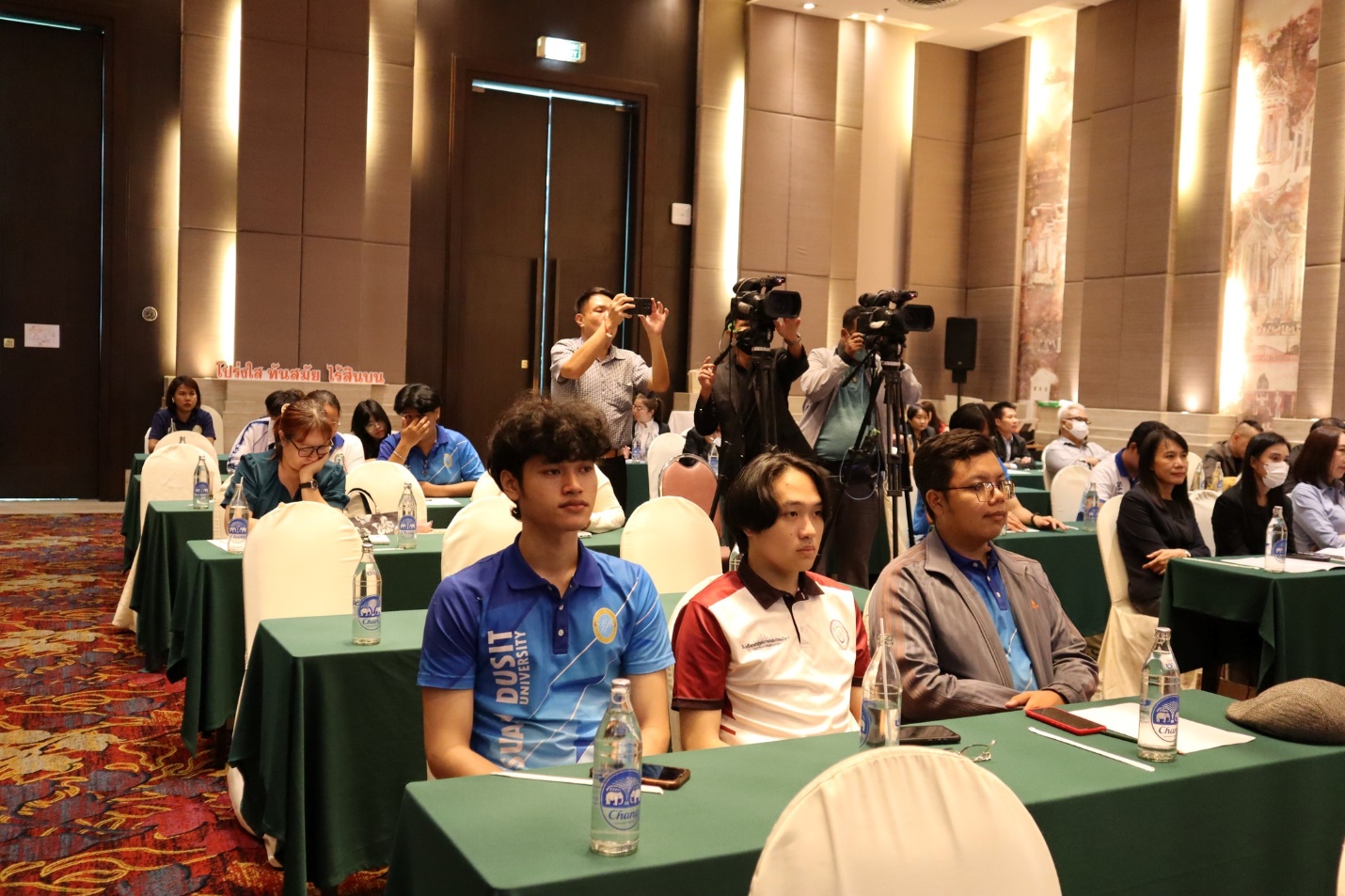
On 23 May 2025, the research team formally transferred the research outputs for use and established a participation-based anti-corruption network. Thirteen organisations received the research outputs and joined the network. The recipients included the National Anti-Corruption Commission, the Public Sector Anti-Corruption Commission, the Department of Local Administration, the Thai Industrial Standards Institute, three Subdistrict Administrative Organisations in Samut Sakhon Province, and local governments in Nonthaburi, Nakhon Si Thammarat, Chiang Mai, Nakhon Ratchasima and Kanchanaburi.
This activity provides strong evidence of research dissemination and uptake pathways involving national and local public bodies. It should be presented as evidence that SDU delivered policy-relevant local-governance research into the hands of potential public-sector users.
Building a Continuing Government-Research Partnership
Together, these activities demonstrate SDU’s capacity to conduct and disseminate research relevant to government policy and implementation. The MBT project provides the clearest collaboration evidence because a public organisation formally appointed SDU as consultant to collect, analyse and assess data for a defined programme framework. The local-governance project complements this evidence by showing that research outputs were transferred to 13 organisations, including government departments and local authorities.
For future reporting, SDU should retain the commissioning letter or contract, final technical report, policy recommendations, minutes of government review meetings, evidence of formal acceptance and records of how findings are used in government planning or implementation. These records will strengthen the University’s ability to demonstrate the full pathway from collaborative research to evidence-informed public policy.
Public evidence links
Government-commissioned MBT research workshop in Prachuap Khiri Khan, 22 October 2025
National online MBT research workshop, 14 November 2025
Research dissemination on participatory local-development planning and transparency, 23 May 2025