
Suan Dusit University places great importance on the preservation of intangible cultural heritage as a key dimension in building sustainable cities and communities. The university employs processes of documentation, transmission, and cultural preservation, ensuring that the stories of people and place—embedded in every corner of Suan Dusit—remain alive in the memory of future generations. These cultural values are not only retained within the university, but also shared with surrounding communities, forming a collective network of shared memories that strengthens cultural continuity and identity.
1. Living Heritage within Suan Dusit University: Documenting the Stories of Historic Buildings and Spaces on Campus
Suan Dusit University is not only an academic institution, but also a “living museum” that narrates the history of women’s education in Thailand and the evolution of Thai society through its original buildings, everyday practices, and cultural traditions that have been passed down to the present day. In 2024, the university undertook systematic documentation and the creation of print and digital media to preserve the memory of its historic spaces—including heritage buildings, ancient walls, royal pavilions, and architectural structures inherited from Suan Sunandha and Dusit Palaces. Various internal units collaborated to recount these histories in their respective contexts, drawing upon archival research, historical photographs, alumni recollections, and local community narratives. The symbolic meanings of architectural elements have also been interpreted, such as: the pink color of Gate 4, representing the birth day color of King Rama V, the Pudtan flower plaster motifs, symbolizing a blend of Thai and Western elegance, and the adaptation of Renaissance architecture into the Thai cultural setting.
This documentation preserves not only the physical details of the buildings, but also the “stories and emotional memory of time”, reflecting the lives of women, teachers, and students across generations who collectively shaped the identity of Suan Dusit. Today, these narratives have been transformed into digital and multimedia resources, ensuring equal access for newer generations. Thus, every wall and every building is not merely a structure, but a record of pride that tells the story of over nine decades of Thailand’s educational heritage.
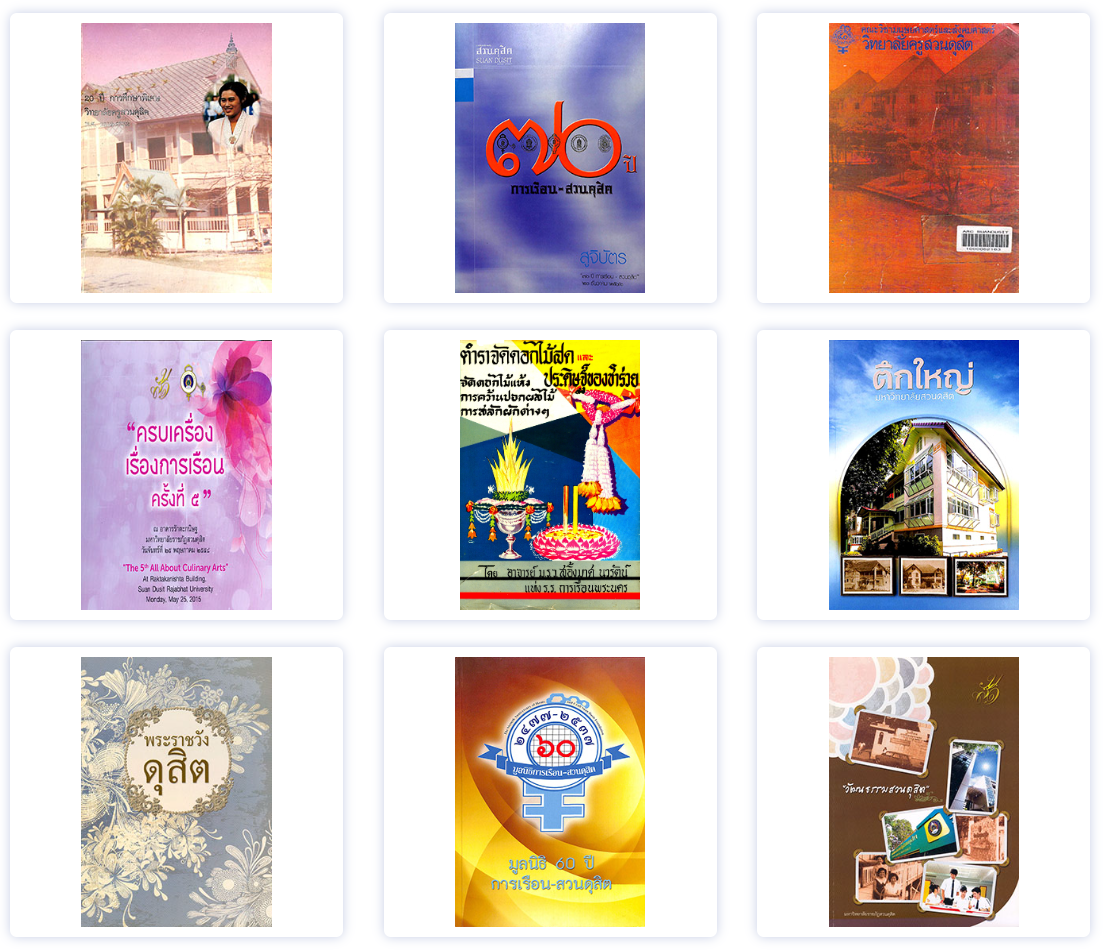 Examples of printed materials that preserve historical narratives are mostly referenced in relation to SDG 11, Indicator 11.2.1: Suan Dusit University and the provision of public spaces for learning about heritage and culture. These materials are accessible to students, staff, and the general public through the university’s E-book system, particularly within the Rare Books collection category. https://ebooks.dusit.ac.th/ Each building, therefore, is not merely a physical structure, but a “record of collective memory” that conveys the way of life of teachers, students, and staff across different eras. It also serves as a learning space for students, personnel, and the public to engage with the stories of the past through the lens of the present.

2. Extending the cultural roots from Suan Dusit to the community: Documenting the wisdom and collective memory of communities beyond the campus.
In addition to documenting the rich cultural narratives within the Suan Dusit University campus itself, the university also plays a crucial role in extending its mission of recording intangible cultural heritage to various areas through community networks surrounding Bangkok, as well as its regional campuses and education centers.
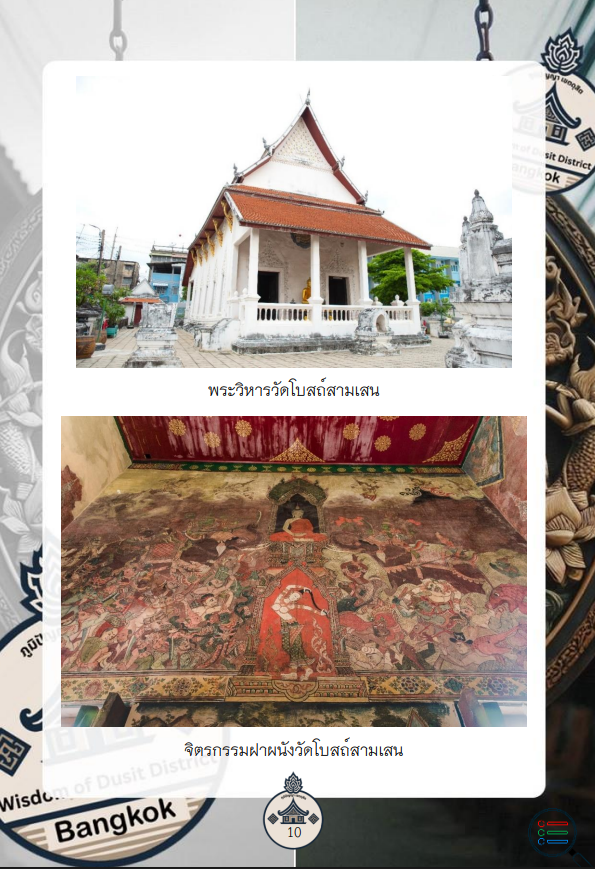
In Bangkok, Suan Dusit University has documented the cultural heritage of the old urban community through a project to preserve and enhance the local cultural and wisdom heritage of the Khlong Samsen area, which encompasses the Wat Bot Samsen, Wat Sawaat Waree Sri Maram, and Wat Chom Sudaram communities. A key activity is the “Community Storyteller Training”, which invites local residents to develop skills in narrating the history of their homes, temples, canal, and local rituals under the theme “Local Wisdom in the Khlong Samsen Community: Narratives and Guided Interpretation.”
A teaching team from the School of Tourism provides both theoretical and practical instruction, including on-site guided tour training at all three temples, with the aim of cultivating “community guides” who can narrate their own history with dignity. Participants are also awarded certificates of completion. Simultaneously, the project is connected to the Plant Genetic Conservation Project under the Royal Initiative to systematically document and conserve native plant species and the related local knowledge along the Khlong Samsen area. This initiative not only revitalizes one of Bangkok’s historic communities but also restores value to cultural expressions that may appear insignificant to outsiders, transforming them once again into a shared asset of contemporary society.

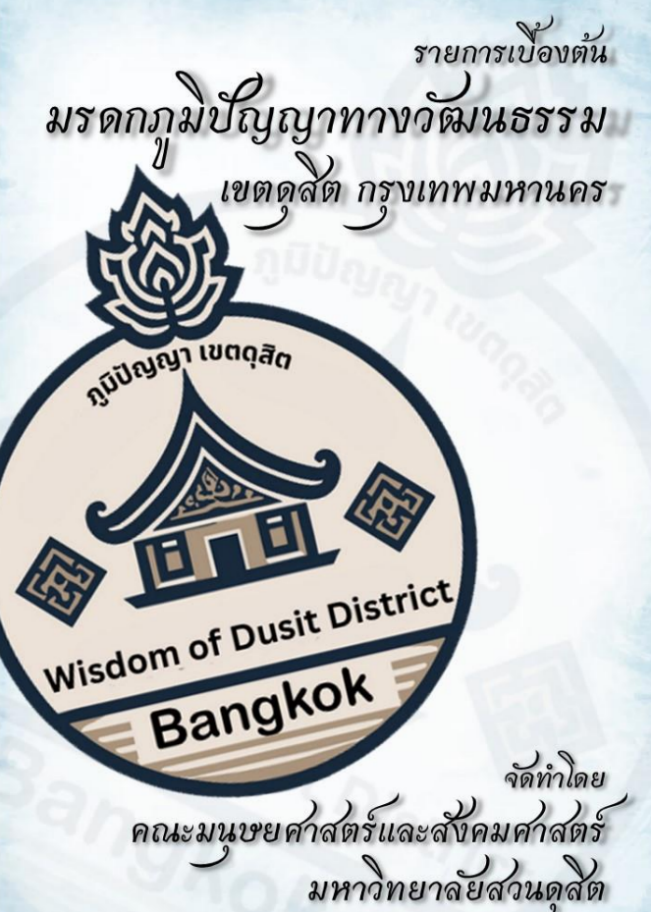
At the same time, Suan Dusit University has developed the “Digital Archives Platform of Intangible Cultural Heritage in Dusit District” as a central database for compiling bodies of knowledge relating to the community’s cultural heritage. The platform emphasizes community participation, enabling local residents to take ownership of the information, fostering learning and cultivating awareness of the value of their own cultural roots.
The platform provides content in multiple languages—Thai, English, Chinese, and Japanese—allowing both local and international audiences to access it equitably, anytime and anywhere. This project is supported by the Fundamental Fund (FF) under the Science, Research and Innovation Promotion Fund for the fiscal year 2024. Suan Dusit University serves as the primary implementing agency in collaboration with the Dusit District Office of the Bangkok Metropolitan Administration. https://dusitwisdom.net/ It has also been published in the form of a digital booklet as an additional channel for dissemination.
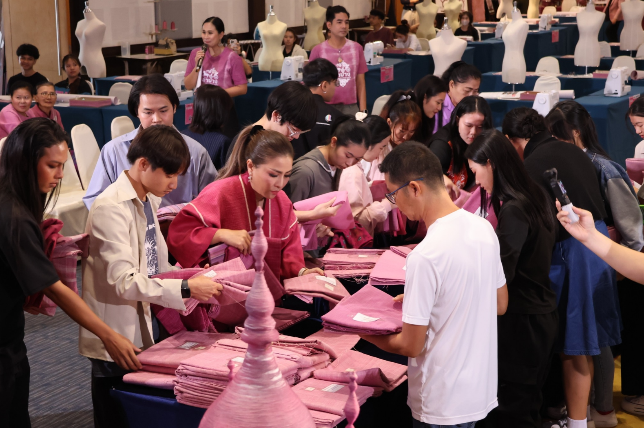
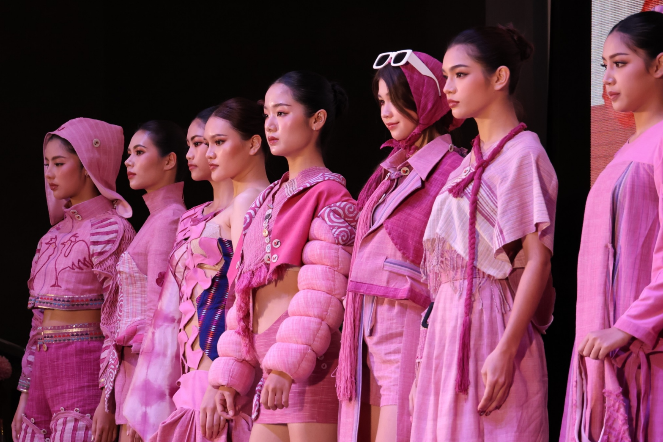
The university has also extended the concept of “University and the City” to the Lampang Educational Center, promoting the preservation of cultural capital through place-based research and organizing the FASHION HACKATHON “Klang Rak Khrang Lampang”. The event provided a platform for emerging designers, textile artisans, and community members to co-create fashion pieces using lac-dyed fabrics, conveying the traditional knowledge of natural dyeing and the stories of elder craftswomen.
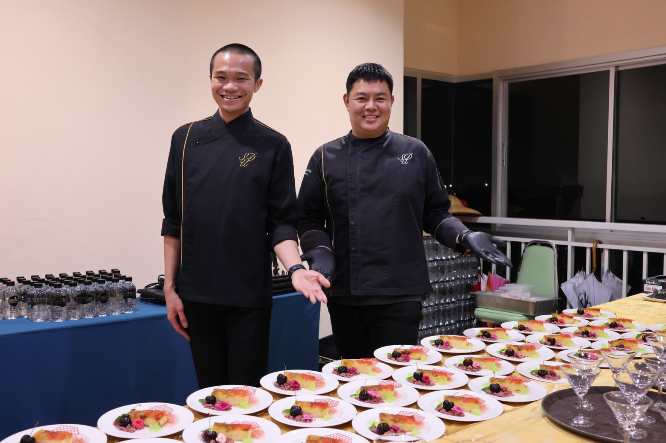
In addition to documenting the body of knowledge, the initiative advances contemporary product design and fosters a sustainable creative economy network. The event also incorporated local culinary arts, featuring items such as “Up Side Down Cake with Lychee Sauce” and “Perilla Seed Cheesecake with Sweet Orange Sauce”, developed by students from Suan Dusit University’s School of Culinary Arts, to reinterpret the flavors of Lanna in new forms. This activity thus stands as a symbol of “making culture something delicious, narratable, and expandable.”

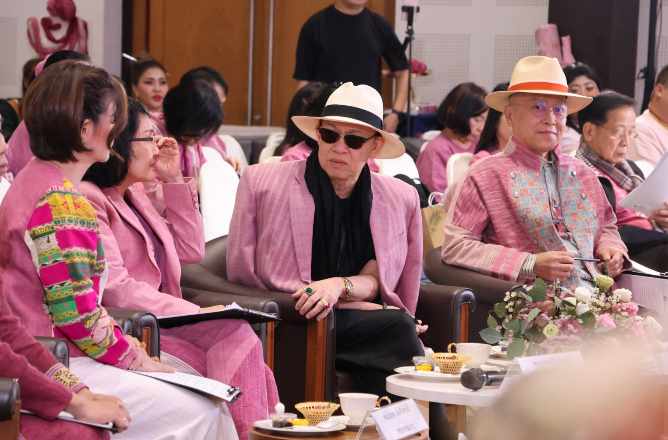
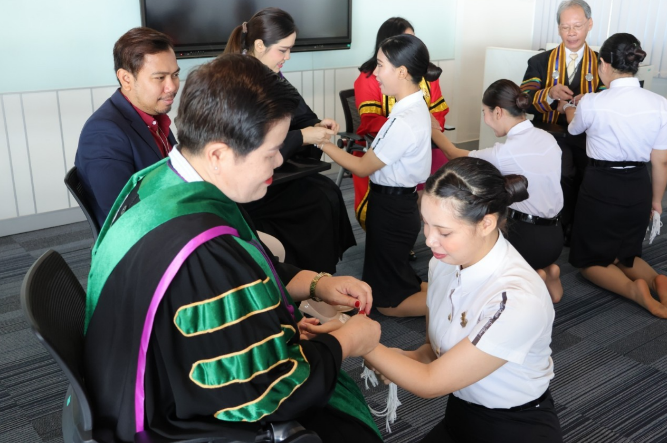
In addition, the Lampang Educational Center holds the Lanna Teacher Veneration Ceremony, titled “Suan Dusit Pays Respect and Honors the Teachers,” to continue the tradition of the Lanna-style wai khru ritual, alongside the presentation of scholarships and certificates to outstanding students. This reflects that the preservation of heritage does not reside solely within ceremonial practice, but endures in the way of life and the spirit of the learning community itself. https://www.dusit.ac.th/home/2024/1341265.html
 At the Suphanburi campus, the university has worked to connect culture with the local economy through the “Hub of Talents in Gastronomy Tourism” project, which advances the concept of the “Suphanburi Model… A Safe Food City for Sustainability.” The initiative documents and develops local culinary wisdom in Suphanburi, transforming it into a driver of the green economy. Suan Dusit University has compiled data on local foods, safe ingredients, and community-based menus, creating a database and gastronomy cultural tourism routes that align with the development of Suphanburi as a model safe-food city meeting international standards.
The university also organized the forum “Suphanburi Model… A Safe Food City for Sustainability” as part of the Thailand Research Expo 2024, accompanied by an exhibition of six innovative food products developed by the university—such as herbal beverages, coffee blended with Centella asiatica leaves, and children’s snack products. All of these are presented as “culinary intangible heritage” rooted in local traditions and extended toward national recognition.
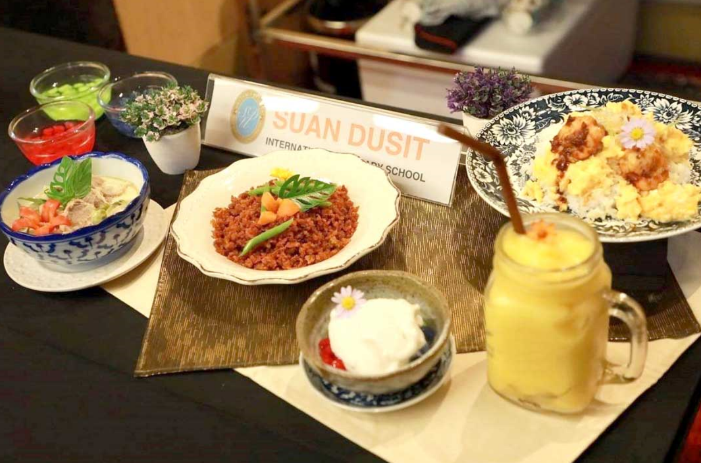

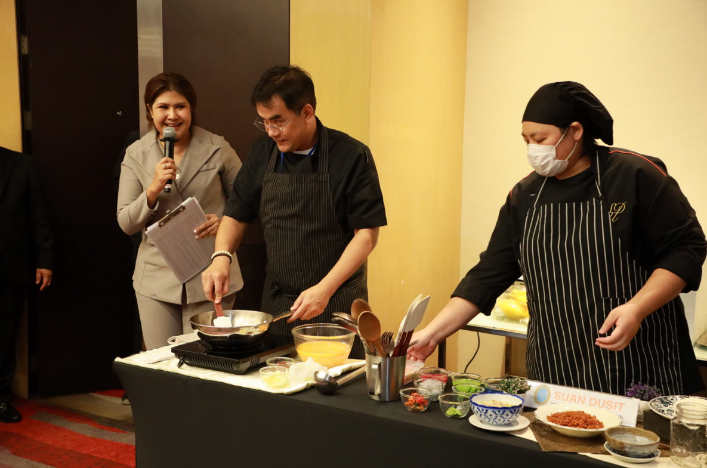
At the same time, the Suphanburi campus also participated in the “Khong Dee Mueang Nher” exhibition organized by the Suphanburi Provincial Office of Commerce to showcase community products and local wisdom. Suan Dusit University contributed its expertise in marketing and product design to help narrate the “identity of the Nher people,” enabling younger generations to understand that accent, cuisine, and local knowledge are all forms of intangible cultural heritage worthy of pride. https://www.dusit.ac.th/home/2024/1328825.html

On another front, the Nakhon Nayok Education Center has undertaken the task of documenting ethnic heritage through the “Rak Chum Chon Khon Thai Phuan” project, which aims to integrate the culture and livelihoods of the Thai Phuan community into the learning process of student teachers. Conducted at the Chaloem Ratcha Wat Fang Khlong Cultural Center in Pak Phli District, the project offers opportunities to learn traditional weaving, cooking, and Thai Phuan rituals, while also collecting the life stories of elders in the community. These narratives are then developed into educational media for teaching future children. Thus, this project preserves cultural heritage through the “teacher formation process,” ensuring that cultural values are passed on to future generations.
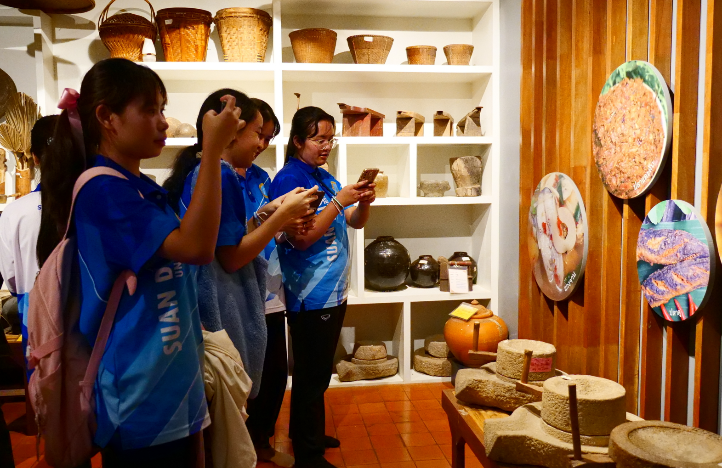
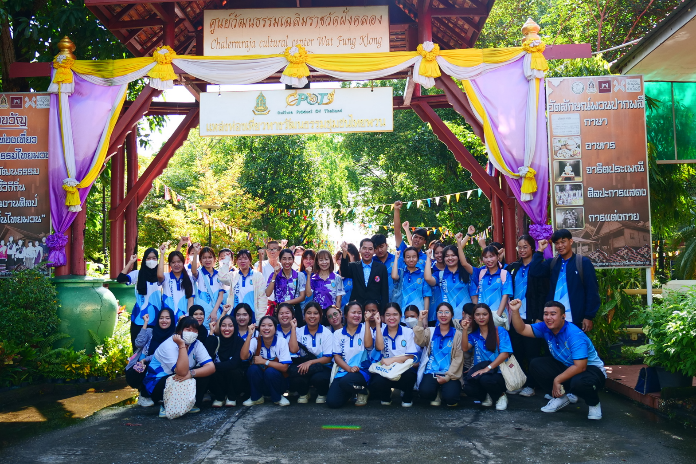
To ensure that these forms of heritage are not confined solely within the classroom, the university also organized the public forum “Kuy Sabai Sabai Life Sara” (Session 284) under the theme “Nostalgia Tourism”, providing a space for academics and younger generations to discuss how “memory-based tourism” can use the narratives and emotions of the past to inspire the future of cities. This activity served as a platform for communicating approaches to cultural heritage preservation in a contemporary format and reinforced Suan Dusit University’s image as an institution committed to lifelong learning.
3. Conclusion: Suan Dusit University as a Custodian of Thailand’s Collective Memory
The initiatives carried out under SDG 11.2.6 demonstrate that Suan Dusit University plays a significant role as a “preserver and transmitter of intangible cultural heritage,” both in terms of place-based heritage and community heritage. The university has integrated academic work, research, and collaborative learning with the preservation of cultural values.
Preservation and documentation do not occur solely in books; rather, they extend into the lived experiences of people through activities, training, exchanges, and living rituals. Every space within Suan Dusit thus becomes a “cultural classroom” where learners and communities can engage in shared processes of understanding and meaning-making.
Suan Dusit stands firm in its role as a university for the community—one that does not simply safeguard heritage, but invites people to experience, appreciate, and actively participate in sustaining its beauty with pride. In doing so, “cultural memory” is not confined to the past but remains alive in the present and passed on sustainably into the future, in alignment with the goals of SDG 11 — Sustainable Cities and Communities.